Pathophysiology
Why arthritic knees hurt — and how GAE interrupts the pain cycle
Osteoarthritis is not just "wear and tear"
Osteoarthritis (OA) was long viewed as purely mechanical cartilage loss. Research now shows it is a whole-joint disease in which inflammation of the synovium — called synovitis — plays a central role in pain. Synovitis is common on MRI in painful osteoarthritic knees and correlates with pain severity, even in patients whose X-rays look only mildly abnormal.
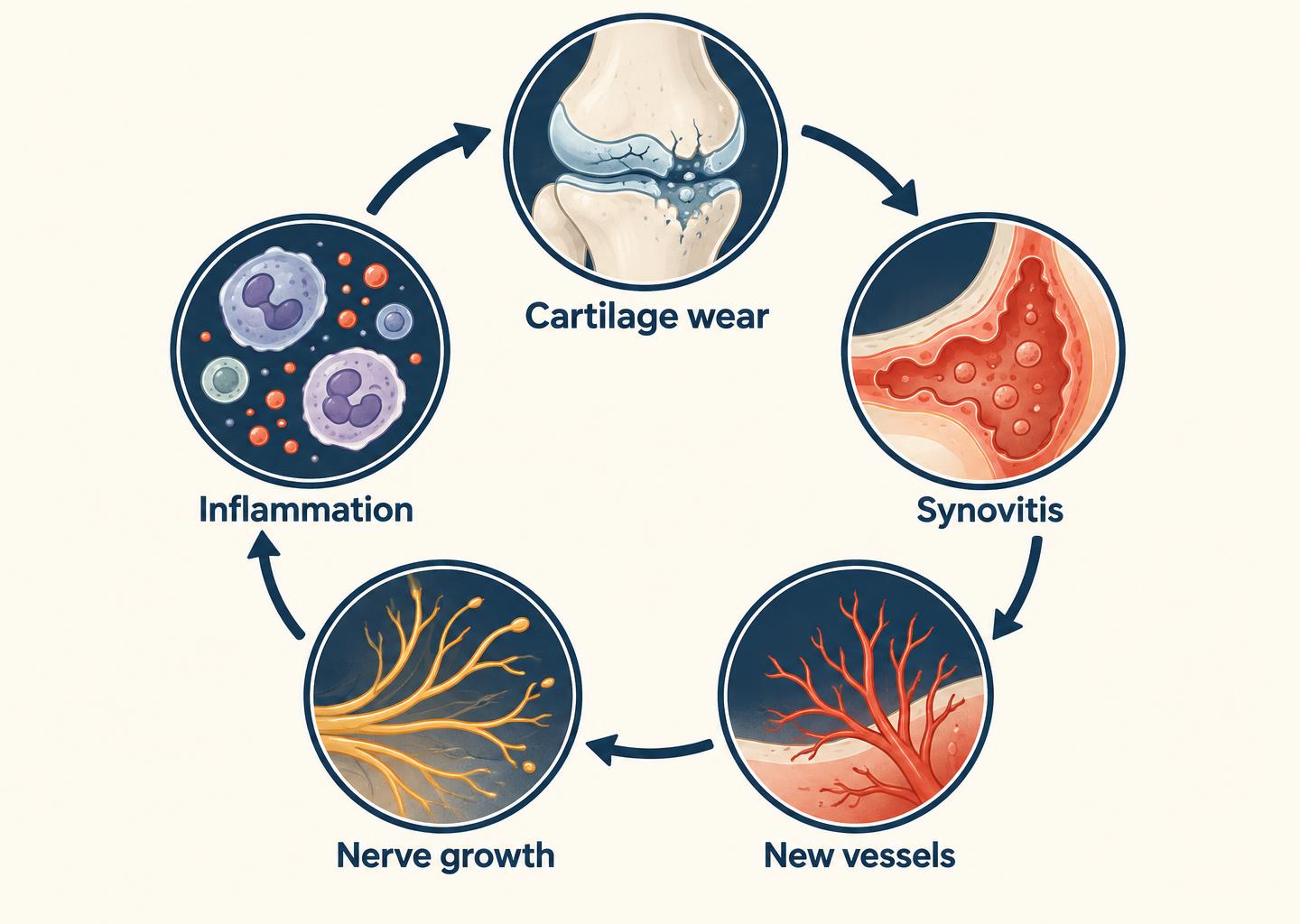
The self-sustaining pain cycle
- 1Cartilage wear. Mechanical stress and cartilage breakdown release debris into the joint.
- 2Chronic synovitis. The synovium (joint lining) becomes persistently inflamed.
- 3Neoangiogenesis. Inflammation triggers growth of abnormal new vessels from genicular artery branches.
- 4Nerve ingrowth. Sensory nerve fibers grow alongside the new vessels, amplifying pain.
- 5More inflammation. New vessels deliver more inflammatory cells, sustaining the loop.
Hypervascularity: what the angiogram shows
During GAE, contrast injected into the genicular arteries reveals areas of hypervascularity — a dense "blush" of tiny abnormal vessels, typically overlying the areas where the patient reports pain. These vessels are fragile and disorganized, unlike the normal arteries that supply bone, muscle, and skin.
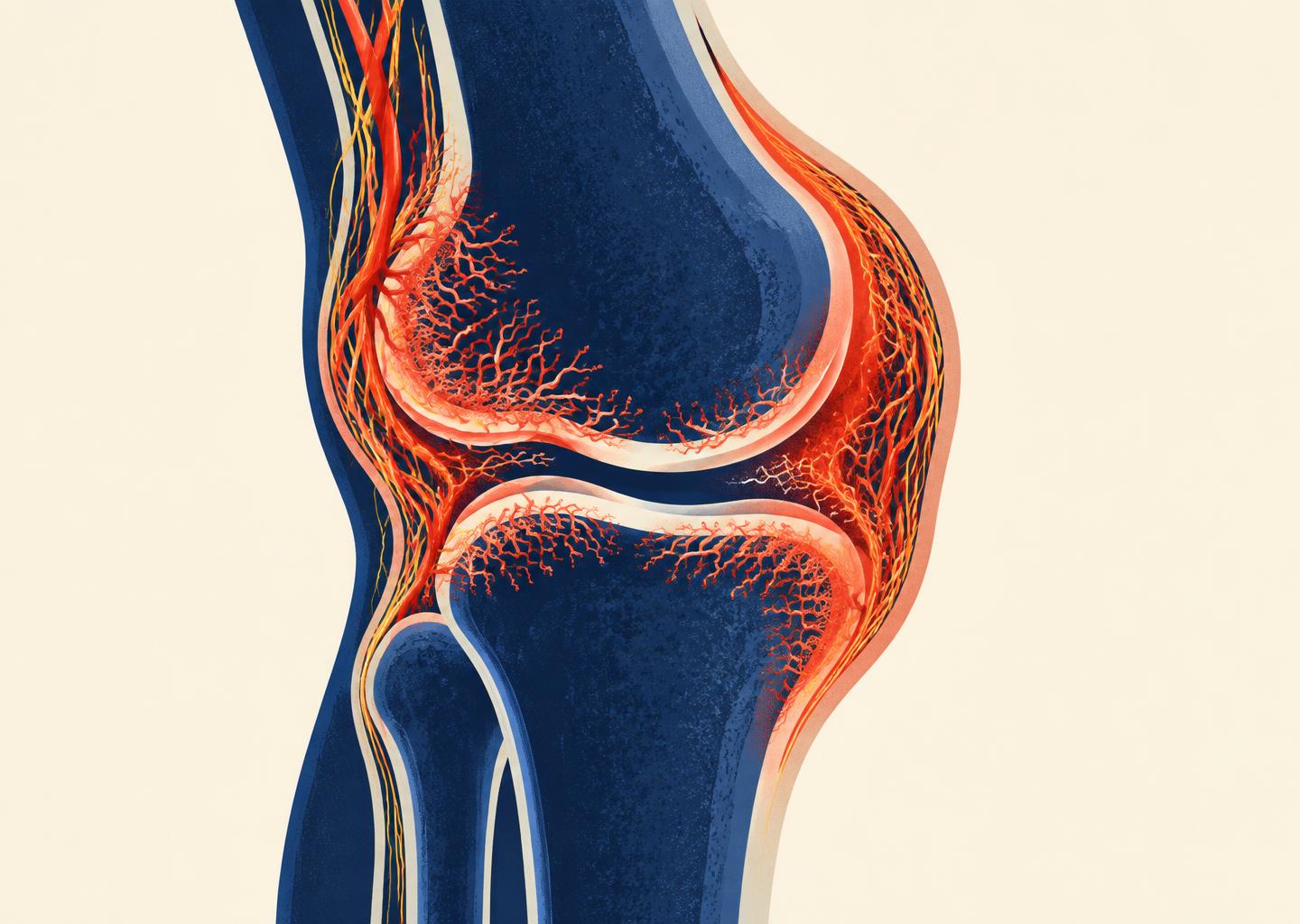
Neoangiogenesis and neurovascular coupling
New vessel growth (neoangiogenesis) is driven by inflammatory signals such as VEGF. Unmyelinated sensory nerves travel alongside these vessels into structures that are normally not pain-sensitive. This coupling of vessels and nerves is thought to be a major source of chronic OA pain.
How embolization halts the cycle
- Targeted: The interventional radiologist selects only the small branches feeding the abnormal blush.
- Calibrated particles: Microscopic embolic particles (often temporary or small-sized) reduce flow in abnormal capillary beds while larger normal vessels stay open.
- Less inflammation: Reduced blood supply decreases delivery of inflammatory cells to the synovium.
- Fewer pain fibers: As abnormal vessels regress, accompanying nerve fibers lose their support.
GAE does not rebuild cartilage. Its goal is pain relief and improved function, which can let patients return to exercise and physical therapy — itself protective for the knee.
Wondering if GAE could help your knee?
Take the 2-minute WOMAC-based candidacy assessment.